

Best practices for group airport transfers in Larnaca

Best practices for group airport transfers in Larnaca
Organising airport transfers for groups in Larnaca presents unique challenges that can derail even the most carefully planned trips. Whether you’re coordinating a family reunion, corporate event, or wedding party, the difference between a smooth arrival and chaotic confusion often comes down to selecting the right transfer method. Groups face issues like vehicle capacity mismatches, unexpected costs, and timing failures that individual travellers rarely encounter. This guide equips you with proven strategies to secure reliable, cost-effective transfers that accommodate your group’s specific needs whilst eliminating common pitfalls that plague group travel logistics.
Table of Contents
- Key Criteria For Choosing Group Airport Transfers
- Popular Group Transfer Options In Larnaca
- Comparing Group Transfer Methods: A Side-By-Side Overview
- Making The Right Choice For Your Group Transfer Needs
- Discover Trusted Group Airport Transfer Services In Larnaca
- Frequently Asked Questions
Key takeaways
| Point | Details |
|---|---|
| Effective planning reduces costs | Booking early and comparing options delivers significant savings for group transfers |
| Vehicle selection matters critically | Matching vehicle type to group size and luggage needs prevents complications |
| Communication ensures reliability | Clear coordination with providers and group members minimises delays and confusion |
| Provider reputation impacts experience | Choosing established services with proven track records guarantees punctuality and professionalism |
Key criteria for choosing group airport transfers
Selecting the right transfer service requires evaluating several interconnected factors that directly impact your group’s experience. Group size stands as the primary consideration, determining whether you need a single large vehicle or multiple smaller ones. Count every passenger accurately, including children, and assess luggage requirements honestly. Underestimating either creates uncomfortable situations or requires last-minute adjustments that inflate costs.
Choosing the right vehicle ensures safe and comfortable transfers, particularly for groups with elderly members or young children. Examine vehicle features like air conditioning, seat belts, and accessibility options. Professional services maintain modern fleets with regular safety inspections, whilst budget operators may cut corners on maintenance. Request specific vehicle models when booking to avoid surprises at pickup.
Cost transparency separates reputable providers from problematic ones. Demand detailed quotes that itemise all charges, including potential supplements for late-night arrivals, extra luggage, or waiting time. Hidden fees destroy budgets and create friction within groups when members must contribute more than expected. Compare total costs across providers, not just base rates, to identify genuine value.
Pro Tip: Request confirmation of your exact vehicle allocation 48 hours before arrival. This simple step reveals whether the provider has actually reserved appropriate capacity or plans to improvise on the day, potentially leaving your group stranded.
Provider reliability determines whether your transfer proceeds smoothly or becomes a stressful ordeal. Research companies through recent reviews focusing on punctuality, driver professionalism, and problem resolution. A provider’s response to flight delays reveals their operational competence. The group airport transfer process demands coordination skills that distinguish professional operators from casual services.
Popular group transfer options in Larnaca
Private taxi services offer maximum flexibility for groups prioritising convenience and personalised service. These door-to-door transfers accommodate custom pickup times and route preferences, eliminating the rigid schedules that constrain shared options. Private services excel for corporate groups requiring professional presentation or families with complex luggage arrangements. Costs run higher per person, but the premium buys privacy, direct routing, and adaptability to unexpected schedule changes.
Shared airport shuttles provide economical solutions for mid-sized groups willing to accept minor compromises on flexibility. These services consolidate passengers heading to similar destinations, distributing costs across multiple parties. Expect moderate delays as shuttles complete other pickups or drop-offs en route. Shared shuttles work brilliantly for budget-conscious groups with standard schedules, but poorly for those requiring precise timing or unusual destinations.
Minibuses and coaches serve large groups attending conferences, weddings, or sporting events where everyone travels together. These vehicles accommodate 15 to 50 passengers depending on configuration, making them ideal for corporate teams or extended families. Understanding the differences between taxis and shuttles helps groups evaluate whether consolidated transport or individual flexibility better serves their needs. Coaches include luggage compartments that handle substantial baggage volumes impossible in smaller vehicles.
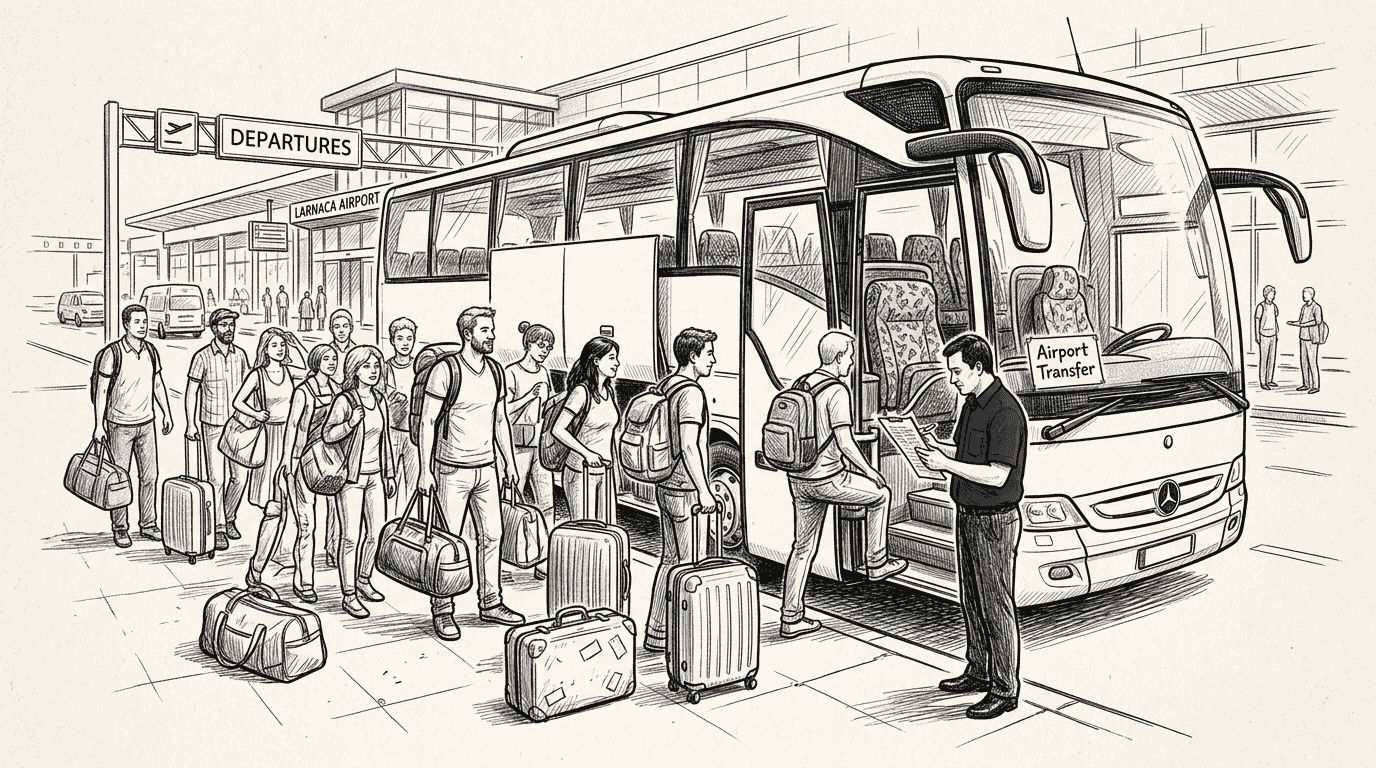
Pro Tip: For groups exceeding 12 passengers, request a coach with onboard toilet facilities for airport transfers longer than 45 minutes. This amenity transforms comfort levels, particularly for groups including elderly members or young children.
Ride-sharing apps and digital booking platforms introduce modern convenience to group transfers through transparent pricing and real-time tracking. These services allow groups to book multiple vehicles simultaneously whilst monitoring each driver’s location. Digital platforms excel at coordinating complex pickups involving subgroups arriving on different flights. However, surge pricing during peak periods can dramatically inflate costs, and vehicle availability may prove unreliable for large groups during busy travel seasons. Reliable airport transfers require providers with guaranteed capacity rather than dynamic marketplaces where availability fluctuates.
Comparing group transfer methods: a side-by-side overview
Each transfer method presents distinct advantages and limitations that suit different group profiles and priorities. Cost per person varies dramatically based on group size and chosen service level. Private taxis typically charge £60-£90 for airport runs, translating to £15-£22 per person for four passengers but only £6-£9 each in larger groups splitting costs. Shared shuttles average £12-£18 per person regardless of group size, whilst minibuses run £120-£180 total, delivering excellent value for groups of 10 or more.
| Transfer Type | Cost Range | Capacity | Flexibility | Best For |
|---|---|---|---|---|
| Private Taxi | £60-£90 | 4-7 passengers | Very High | Small groups prioritising convenience |
| Shared Shuttle | £12-£18 per person | Mixed groups | Low | Budget-conscious mid-sized groups |
| Minibus | £120-£180 | 10-16 passengers | Moderate | Large families or corporate teams |
| Coach | £200-£350 | 20-50 passengers | Moderate | Major events or conferences |
| Ride-sharing | Variable | 4-6 per vehicle | High | Tech-savvy groups with flexible timing |
Vehicle capacity and luggage limits create practical constraints that eliminate certain options for specific groups. Standard taxis accommodate four passengers with limited boot space, forcing groups with substantial luggage to book multiple vehicles or upgrade to minivans. Shared shuttles impose strict luggage allowances, typically one large bag plus one carry-on per passenger, problematic for groups on extended holidays or carrying sports equipment. Minibuses and coaches provide dedicated luggage compartments that handle oversized items like golf clubs, musical instruments, or wedding attire without passenger space compromises.
Booking flexibility and cancellation policies significantly impact risk management for group organisers. Comparing features of each transfer option reveals that private services generally offer generous cancellation windows of 24-48 hours, whilst shared shuttles enforce stricter policies with limited refunds. Corporate groups booking months in advance require flexible terms accommodating potential itinerary changes, making private services worth premium pricing despite higher base costs.
Making the right choice for your group transfer needs
Matching transfer types to specific scenarios requires analysing your group’s priorities and constraints systematically. Corporate groups attending business meetings cannot tolerate delays, making private transfers with guaranteed pickup times essential despite higher costs. Families prioritise comfort and direct routing over minor cost differences, particularly when travelling with young children whose patience for extended journeys proves limited. Event attendees often accept shared services when schedules align, as coordinated arrival times suit group activities.
Effective coordination begins with establishing clear communication channels among all group members. Create a shared document listing everyone’s flight details, contact numbers, and accommodation addresses. Designate a single point person who liaises with the transfer provider, preventing confusion from multiple people requesting changes. Effective planning and early booking improve reliability whilst securing better rates before peak season pricing takes effect.
Pro Tip: Exchange mobile numbers with your driver 24 hours before pickup and confirm the exact meeting point using GPS coordinates rather than terminal descriptions, which confuse passengers unfamiliar with airport layouts.
Balancing budget against convenience requires honest assessment of your group’s tolerance for compromise. Calculate the true cost difference between options by dividing total prices by passenger count, then evaluate whether the savings justify reduced flexibility or comfort. A £40 difference between private and shared services translates to just £4 per person in a 10-person group, often negligible compared to overall trip costs. The benefits of early booking extend beyond pricing to include vehicle selection and route customisation impossible with last-minute arrangements.
Confirm these critical details before finalising any group transfer booking:
- Exact vehicle model and confirmed capacity matching your group size
- Driver contact information and backup communication protocol
- Meeting point with photographic reference showing exact location
- Total price including all potential supplements and payment terms
- Cancellation policy with specific refund percentages and deadlines
- Contingency plan for flight delays or early arrivals
- Special requirements like child seats, wheelchair access, or extra luggage space
Corporate groups benefit from requesting professional drivers familiar with business etiquette and capable of maintaining confidentiality during sensitive discussions. Invoice documentation supporting expense claims should be arranged during booking rather than requested afterwards. Families with young children need child seat confirmation in writing, as verbal assurances often prove unreliable when vehicles arrive without proper safety equipment.
Discover trusted group airport transfer services in Larnaca
When your group needs reliable, professionally managed transfers in Larnaca, choosing a service with proven local expertise makes all the difference. Taxi Cab Larnaca operates a diverse fleet accommodating groups from intimate families to large corporate delegations, ensuring you’ll find the perfect vehicle for your specific requirements. Their transparent pricing eliminates surprise charges, whilst experienced drivers navigate Larnaca’s roads efficiently, getting your group to destinations punctually.

Whether you need airport transfers from Larnaca airport for an arriving conference delegation or convenient taxi services in Kiti Mazotos for resort-bound families, their comprehensive coverage spans the entire region. The straightforward process for booking reliable airport taxis ensures your group secures appropriate vehicles without navigating complex reservation systems. Local knowledge combined with modern fleet management delivers the reliability that transforms group transfers from potential stress points into seamless travel experiences.
Frequently asked questions
What is the best way to ensure punctual group pickups?
Coordination through real-time communication tools keeps everyone informed about driver location and any delays. Share driver contact details with all group members and establish a designated meeting coordinator who monitors flight status and communicates updates. Booking reliable taxi services with established providers reduces delay risks through professional dispatch systems and backup vehicle availability.
How can large families save money on airport transfers?
Opting for private vans or minibuses instead of multiple taxis delivers substantial savings when groups exceed six passengers. A single 12-seater minibus costing £150 proves far more economical than three taxis at £75 each, whilst keeping the family together. Booking shared shuttles works brilliantly when flight schedules align with shuttle departure times, though this requires flexibility around pickup timing.
Are pre-booked transfers better than on-demand taxis for groups?
Pre-booking guarantees vehicle availability and locks in rates, eliminating the uncertainty of finding suitable transport upon arrival. Groups face significant risks with on-demand services during peak periods when available vehicles may lack sufficient capacity or drivers quote inflated prices. Advance reservations allow providers to allocate appropriate vehicles and plan routes efficiently, ensuring smooth pickups even during busy travel seasons.
What special considerations apply for corporate group transfers?
Punctuality becomes non-negotiable for business groups with scheduled meetings or conference registrations. Request professional drivers experienced in corporate service who understand discretion and business etiquette. Ensure the provider can issue proper invoices with detailed breakdowns supporting expense claims and tax documentation. Planning routes that accommodate tight schedules whilst allowing buffer time for unexpected delays demonstrates the professionalism corporate clients expect. Booking corporate taxis through established business channels often provides dedicated account management and priority service during critical travel periods.
Recommended
- How airport pickups work: your guide to Larnaca 2026
- Difference Taxi vs Shuttle: Choosing Best for Larnaca
- Airport Transfers Larnaca Airport ✔️ Taxi Cab Larnaca
- Taxi Larnaca Airport ✔️ Taxi Cab Larnaca
- Master the Group Airport Transfer Process for Alpine Trips • Blog • Go Transfer Peak
- Reliable Miami Airport Transfers for Stress-Free Travel