

Key features of reliable taxi fleets: What matters most

Key features of reliable taxi fleets: What matters most
TL;DR:
- Choosing a reliable taxi in Larnaca depends on fleets with strict driver compliance, data-driven management, and ongoing performance monitoring. These features ensure safety, punctuality, and consistent high-quality service, especially vital for airport transfers and special occasions. Many fleets fail by neglecting one pillar; the best integrate all three, combining local expertise with advanced technology and continuous oversight.
Picking a taxi service in Larnaca should be straightforward, but the sheer number of companies claiming to be the most reliable makes the choice genuinely confusing. Whether you need an airport transfer after a long flight, a polished vehicle for a corporate meeting, or elegant transport for your wedding day, the wrong choice costs you time, comfort, and peace of mind. The good news is that reliable fleets share specific, measurable features that separate them from the rest. Once you know what to look for, the decision becomes far simpler and far more confident.
Table of Contents
- Comprehensive driver checks and ongoing compliance
- Data-driven fleet management and operational efficiency
- Performance monitoring: The hidden engine of reliability
- How these features compare: Choosing your taxi fleet
- Why most fleets miss the mark on reliability (and what matters more)
- Find your reliable taxi fleet in Larnaca
- Frequently asked questions
Key Takeaways
| Point | Details |
|---|---|
| Driver compliance comes first | Well-checked and continuously monitored drivers are the backbone of trusted fleets. |
| Operational efficiency matters | Data-driven fleet management cuts delays and boosts reliability for every journey. |
| Performance is measured, not guessed | Top fleets track real-time performance to deliver consistent quality and address issues quickly. |
| Choose features based on your needs | Prioritise compliance, smart operations, or monitoring depending on your trip—especially for airports or events. |
Comprehensive driver checks and ongoing compliance
Reliability starts long before a car pulls up to your door. It begins the moment a driver is recruited. The most trustworthy fleets treat driver quality and legal compliance as a foundational requirement, not something they revisit occasionally. They run thorough checks every step of the way: verifying licences, confirming the right to work, and ensuring drivers meet the legal standards required to carry passengers commercially.
Right-to-work and licensing checks are not just a box-ticking exercise. Fleets that treat these as ongoing obligations, rather than one-off onboarding tasks, are far better placed to avoid suspended operations and ensure that every driver behind the wheel is fully authorised and continuously monitored.
Here is what a genuinely compliant fleet does consistently:
- Verifies driver licences at the point of hire and at regular renewal intervals
- Conducts background checks that cover criminal records and driving history
- Monitors licence validity in real time, flagging any lapses immediately
- Trains drivers on local road regulations, passenger safety, and professional conduct
- Keeps documentation readily available for inspection at any time
“A fleet that cannot demonstrate its drivers are legally qualified and continuously monitored is a fleet you should not trust with your airport transfer or your wedding day.”
For travellers and local residents in Larnaca, this matters enormously. Cyprus has its own regulatory framework, and the best operators align their internal standards with and often beyond those requirements. You can read more about what this looks like in practice by exploring taxi safety standards specific to Cyprus and what they mean for you as a passenger.
Pro Tip: Before you book any taxi service, ask directly whether the company conducts regular compliance reviews. A fleet confident in its standards will answer without hesitation.
The premium taxi features that distinguish top-tier operators almost always begin with this foundation. Get the driver compliance piece right, and everything else becomes much easier to build upon.
Data-driven fleet management and operational efficiency
With proper driver checks in place, the next reliability factor is how a fleet is managed day to day, and this comes down to efficiency and the smart use of technology. A driver can be perfectly qualified, but if the dispatch system sends them to the wrong side of Larnaca during peak hours, you are still going to be late.
Data-driven fleet control reduces avoidable inefficiencies such as idle cruising and delays in turnaround time, which directly correlates with better operational performance and more punctual service. In plain terms, fleets that use data wisely arrive on time more often.
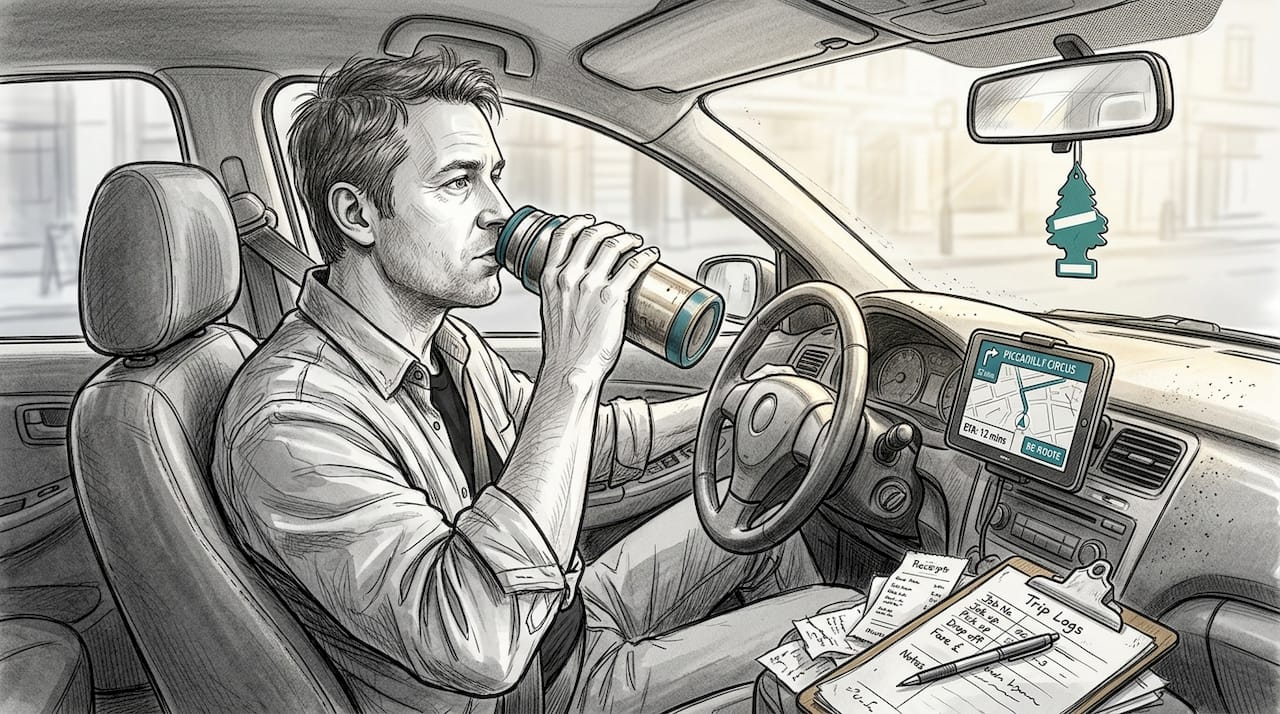
Consider the practical metrics that matter most to passengers:
| Metric | Poorly managed fleet | Data-driven fleet |
|---|---|---|
| Average wait time | 12 to 18 minutes | 4 to 7 minutes |
| Late arrival frequency | 25% of bookings | Under 5% of bookings |
| Idle cruising per shift | 30%+ of driver time | Under 12% of driver time |
| Journey time accuracy | Within 15 minutes | Within 3 minutes |
These numbers make a real difference when you are catching a flight from Larnaca International Airport or heading to a corporate meeting where being five minutes late is simply not acceptable.
Smart fleets rely on a combination of tools to achieve this:
- GPS tracking that monitors every vehicle’s real-time position
- Automated dispatch systems that assign the closest available driver
- Route optimisation software that accounts for traffic and road conditions
- Booking management platforms that reduce double-bookings and errors
- Demand forecasting to ensure adequate coverage during peak periods
Efficiency is not just about speed. It is about predictability. Knowing your taxi will arrive at the time stated, not approximately around that time, is what separates good from excellent.
Pro Tip: When comparing services, ask providers for their average wait time data. A fleet confident in its performance will share this openly. If they cannot produce a figure, that tells you something important.
If you are managing business travel regularly and want to understand how these efficiency gains translate into cost savings, the guide on optimising taxi costs for Cyprus businesses is well worth reading. And for a broader look at how taxi technology advances are changing the experience in Larnaca, there is detailed context available to help you understand what is now possible in the local market.
Performance monitoring: The hidden engine of reliability
Operational efficiency is only part of the story. Truly reliable fleets ensure ongoing performance by closely measuring and improving how they work, not just assuming yesterday’s standards will hold tomorrow.
KPI dashboards connected to dispatch and reservations allow fleet managers to see exactly what is happening across every vehicle in real time. This kind of visibility makes it possible to spot problems before they become patterns, and to course-correct quickly when standards slip.
Here is how the best fleets structure their performance monitoring cycle:
- Collect real-time journey data from every active vehicle, including departure time, arrival time, and any passenger-reported issues.
- Analyse that data daily against agreed KPI benchmarks such as on-time percentage and average customer satisfaction score.
- Identify underperforming routes, time slots, or individual drivers where standards are falling below target.
- Act by adjusting dispatch strategies, retraining specific drivers, or revising route planning for problem areas.
- Review the impact of changes within a defined timeframe, typically two to four weeks, before setting new benchmarks.
This is not a theoretical process. It is what separates fleets that consistently impress customers from those that rely on their reputation from five years ago.
| Dashboard feature | Basic service | Reliable fleet |
|---|---|---|
| Live vehicle tracking | Sometimes | Always |
| On-time percentage reporting | Monthly summary | Daily, per driver |
| Customer feedback integration | Manual, infrequent | Automated, every journey |
| Issue resolution tracking | Email chain | Integrated ticket system |
| Historical trend analysis | None | Rolling 12-month data |
“The fleets that never seem to have problems are not lucky. They have built systems that catch small problems before they become big ones.”
For an in-depth look at how modern fleet operations are structured to deliver this level of consistency, the guide on modern fleet management explains what today’s smarter fleets look like from the inside.
How these features compare: Choosing your taxi fleet
To make the right choice based on your journey, it is helpful to see how these core features match up when viewed side by side. Not every passenger needs the same combination of strengths, and understanding the priorities for your specific scenario helps you ask the right questions before booking.
| Feature | Driver compliance | Data-driven efficiency | Performance monitoring |
|---|---|---|---|
| Primary benefit | Safety and legal protection | Punctuality and journey speed | Consistency over time |
| Visible to passengers? | Indirectly, via professionalism | Directly, through wait times | Via reviews and reputation |
| Easy to verify? | Ask for compliance records | Request average wait time data | Check long-term review trends |
| Most critical for | Any journey, always | Airport runs, business travel | Regular and repeat journeys |
The data-driven control and performance monitoring that top fleets employ does not just reduce inefficiency in isolated moments. It builds a structural advantage that compounds over time, producing consistently better outcomes for passengers across every type of journey.
Here is how to prioritise these features depending on your situation:
- Airport transfer: Prioritise data-driven efficiency above all. You need a guaranteed arrival time, reliable vehicle tracking, and a driver who knows exactly where to meet you in the terminal.
- Corporate travel: Driver compliance and performance monitoring matter most. Your clients and colleagues form impressions based on the professionalism and reliability of the vehicle and driver.
- Wedding or special occasion: All three features matter equally. You need legal compliance for insurance purposes, efficient coordination for timing, and high standards that are consistently maintained regardless of the day.
- Regular local travel: Performance monitoring and customer feedback integration become important for building a long-term relationship with a service you can trust.
For a fuller picture of what industry reliability standards look like across Cyprus, it is worth reviewing what local operators are expected to maintain and how the best ones exceed those expectations regularly.
Why most fleets miss the mark on reliability (and what matters more)
Here is an honest perspective from inside this industry. Most taxi fleets do not fail because they lack technology. They fail because they invest heavily in one or two of these pillars while neglecting the third entirely. It is surprisingly common to find a fleet that has installed sophisticated GPS tracking but has never run a structured compliance review for its drivers. Or a fleet with impeccable driver records that has no real-time dispatch system and still relies on phone-based bookings.
The uncomfortable truth is that reliability is not a feature you can purchase once and then forget. It is a discipline. And in the Larnaca market specifically, where travellers are often arriving after long-haul flights with high expectations, or local families are trusting a company with one of the most important days of their lives, the margin for error is close to zero.
What genuinely reliable fleets understand, and what many others miss, is that local knowledge amplifies all three pillars. A driver who knows every shortcut around Larnaca during peak tourist season, who understands the specific logistics of the airport’s terminal layout, and who has built a relationship with regular clients provides value that no dashboard can fully replicate. Technology supports great service. It does not replace the human judgement and local expertise that make a journey truly seamless.
There is also a feedback loop that the best operators take seriously. Customer comments do not just go into a database. They trigger specific changes in how drivers are briefed, how routes are planned, and how new bookings are managed. That loop, from passenger experience back to operational decision-making, is the real engine of sustainable reliability.
If you want to understand what these premium taxi essentials look like when all three pillars are working in harmony, the results are unmistakable. Passengers arrive relaxed. Drivers are confident and professional. And the service reputation builds itself through word-of-mouth rather than marketing spend alone.
Find your reliable taxi fleet in Larnaca
If you are ready to put all this guidance to use and book your next reliable taxi, here is where to start.

At Taxi in Larnaca, every journey is built on the three pillars covered in this guide: thorough driver compliance, smart data-driven management, and continuous performance monitoring. Whether you need a dependable airport transfer vehicle for an early morning flight, seamless best taxi services for agency clients, or a premium experience for a special occasion, our fleet is designed to deliver every time. Explore our full range of luxury transport options and book with confidence knowing that reliability is not a promise here. It is a system.
Frequently asked questions
How do I confirm a fleet’s driver compliance before booking?
Ask the company directly whether they conduct regular right-to-work and licensing checks and request written confirmation or documentation for added peace of mind.
What’s the key sign of a data-driven taxi fleet?
Look for short, consistent wait times, confirmed GPS tracking on every booking, and a dispatcher who can tell you your driver’s exact location. Data-driven fleet control produces these results reliably rather than occasionally.
Is performance monitoring really necessary for reliability?
Absolutely. KPI dashboards connected to live dispatch allow fleets to catch and correct service problems before they become habits, which is what keeps standards high across every journey type.
Which feature matters most for airport transfers in Larnaca?
Data-driven efficiency is the most critical factor for airport runs, ensuring timely pickups and drop-offs even when traffic or terminal conditions change unexpectedly.