
What is a modern taxi fleet? Guide to safe, smart travel

What is a modern taxi fleet? Guide to safe, smart travel
TL;DR:
- Modern taxi fleets utilize advanced digital technology for safer, faster, and more reliable service.
- Passengers in Larnaca can book fixed-price rides with real-time tracking and safety features.
- Cyprus’s 2026 reforms aim to regulate the industry, improving safety, transparency, and environmental standards.
Most people picture a taxi as simply a car with a sign on the roof, waiting at a rank or flagged down on a street corner. That image is decades out of date. Today, a modern taxi fleet is a coordinated group of vehicles managed through advanced digital software covering dispatch, real-time GPS tracking, route optimisation, maintenance scheduling, and analytics. In Larnaca, Cyprus, this shift is happening right now, driven by both technology and sweeping industry reforms. Whether you are visiting for a holiday or living here year-round, understanding what a modern fleet actually means will change how you choose your next ride.
Table of Contents
- Defining a modern taxi fleet: Key features and technology
- How modern taxi fleets work in Larnaca: Booking, vehicles, and customer experience
- Cyprus taxi industry reforms: Regulations and their local impact
- Modern fleet benefits: Safety, reliability, and real results in Larnaca
- What most guides miss: The local realities and global lessons
- Book your modern taxi in Larnaca — quick, safe and flexible
- Frequently asked questions
Key Takeaways
| Point | Details |
|---|---|
| All taxis are not alike | Modern taxi fleets in Larnaca differ by using digital management, apps, and in-car tech. |
| Safety and comfort improvements | Features like real-time tracking, SOS, and WiFi keep passengers safer and more comfortable. |
| Regulations bring reliability | Recent reforms in Cyprus ensure digital bookings, fair pricing, and safer taxi rides for everyone. |
| Booking has never been easier | Apps and pre-booking capabilities mean you can arrange a ride reliably any time of day. |
Defining a modern taxi fleet: Key features and technology
A modern taxi fleet is not just a collection of cars owned by one operator. It is a managed, digitally coordinated system where every vehicle, driver, and journey is connected through software. The result is a service that is measurably safer, faster, and more consistent than the traditional model of hailing a cab and hoping for the best.
Traditional taxis relied on radio dispatch, paper records, and driver instinct. Modern fleets operate differently. Key mechanics include real-time GPS tracking, automated dispatching, driver mobile apps, telematics for fuel and behaviour monitoring, AI for predictive maintenance, and safety features like SOS buttons and geofencing. Geofencing, for example, creates a virtual boundary around a zone, alerting operators if a vehicle deviates from an approved route.
| Feature | Traditional taxi | Modern fleet |
|---|---|---|
| Dispatch method | Radio or street hail | Automated app dispatch |
| Vehicle tracking | None | Real-time GPS |
| Driver accountability | Minimal | App-based profiles and ratings |
| Maintenance scheduling | Reactive | AI-driven predictive alerts |
| Payment options | Cash only | Card, app, and contactless |
The technology behind taxi service in Larnaca has advanced considerably. Route optimisation software alone can reduce fuel costs by identifying the most efficient path for each journey, while fleet analytics flag patterns such as harsh braking or excessive idling that affect both safety and running costs.
Here are the core features that define a modern fleet:
- Real-time GPS tracking for every active vehicle
- Automated dispatch that matches the nearest suitable driver to each booking
- Driver mobile apps for job acceptance, navigation, and communication
- Telematics monitoring speed, fuel use, and driving behaviour
- Predictive maintenance alerts based on mileage and sensor data
- SOS buttons and geofencing for passenger and driver safety
- Customer-facing apps with live ETAs and driver profiles
For operators thinking about optimising taxi costs in Cyprus, the analytics layer is particularly valuable, turning raw journey data into actionable savings.
Pro Tip: When choosing a taxi service, ask whether the fleet uses geofencing and SOS features. These are now standard in reputable modern fleets and indicate a serious commitment to passenger safety.
How modern taxi fleets work in Larnaca: Booking, vehicles, and customer experience
Knowing the technology is one thing. Knowing what you actually experience as a passenger in Larnaca is another. The good news is that the booking process has become remarkably straightforward.

You can book through a smartphone app, a website, or a phone call. App-based bookings give you the most control: you see available vehicles nearby, get a fixed price before you confirm, track your driver’s approach in real time, and receive a notification when they arrive. Web bookings work well for pre-arranged transfers, especially for airport pickups where timing matters. Phone bookings remain popular with older residents and those without smartphones.
Modern fleets in Larnaca, such as Alfa Taxi, offer app-based booking, fixed pricing, real-time tracking, diverse vehicle types, WiFi, air conditioning, and 24/7 airport transfers. Fixed pricing is particularly important: you agree the fare before the journey starts, removing the anxiety of watching a meter climb in traffic.
Vehicle options in a well-run fleet typically include:
| Vehicle type | Best suited for |
|---|---|
| Standard saloon | Solo travellers, couples |
| Executive saloon | Business travel, airport runs |
| Minivan | Families, groups up to 7 |
| Premium car | Special occasions, weddings |
Passenger-focused features now include in-car WiFi, USB charging, card payment terminals, and driver profile displays so you know exactly who is picking you up. These details matter enormously when you are arriving at an unfamiliar airport late at night.
For those using Larnaca airport transfer options, the ability to pre-book and lock in a price removes a significant source of travel stress. The benefits of pre-booking taxis extend beyond price certainty: your driver monitors your flight status, so a delay does not mean you are left stranded.
Pro Tip: Always pre-book your airport pickup rather than joining the taxi queue on arrival. Modern fleet apps allow you to enter your flight number so the driver adjusts automatically if your flight is delayed.
Cyprus taxi industry reforms: Regulations and their local impact
Larnaca’s taxi landscape is not just being shaped by technology. Regulation is playing an equally important role, and the changes coming in 2026 are significant for anyone who uses taxis regularly.
The Cyprus taxi industry has faced longstanding problems. Licences have been bought and sold on a black market, driving up costs and limiting availability. Illegal or “pirate” taxis operate without proper insurance or oversight, putting passengers at genuine risk. Supply has been uneven, with too few taxis in some areas and at certain times.
Reforms in 2026 mandate a state-managed digital platform, mandatory taximeters, card payment acceptance, electric vehicle incentives, and compulsory driver training. These are not minor tweaks. They represent a fundamental restructuring of how the industry operates.
“Radical changes are planned for Cyprus taxis, with the 2026 reform targeting licence irregularities, piracy, and the absence of digital infrastructure that passengers in other European countries take for granted.”
For passengers, the practical impact is positive. More licensed vehicles, standardised fares, and digital accountability mean fewer unpleasant surprises. The EV incentives also signal a greener fleet in the coming years, which matters to environmentally conscious travellers.
When choosing a taxi in Larnaca, look for these indicators of a compliant, trustworthy operator:
- A visible licence number displayed in the vehicle
- A functioning taximeter or clearly stated fixed price
- Card payment capability
- A named, rated driver profile if booking via app
- Alignment with industry travel standards that reflect the new regulatory framework
Understanding Cyprus taxi safety standards is especially important for tourists who may not know the difference between a licensed operator and an unlicensed one. The reforms make this distinction clearer, but passenger awareness remains essential.
Modern fleet benefits: Safety, reliability, and real results in Larnaca
Regulation and technology only matter if they produce real results. The evidence suggests they do, and the numbers are worth knowing.
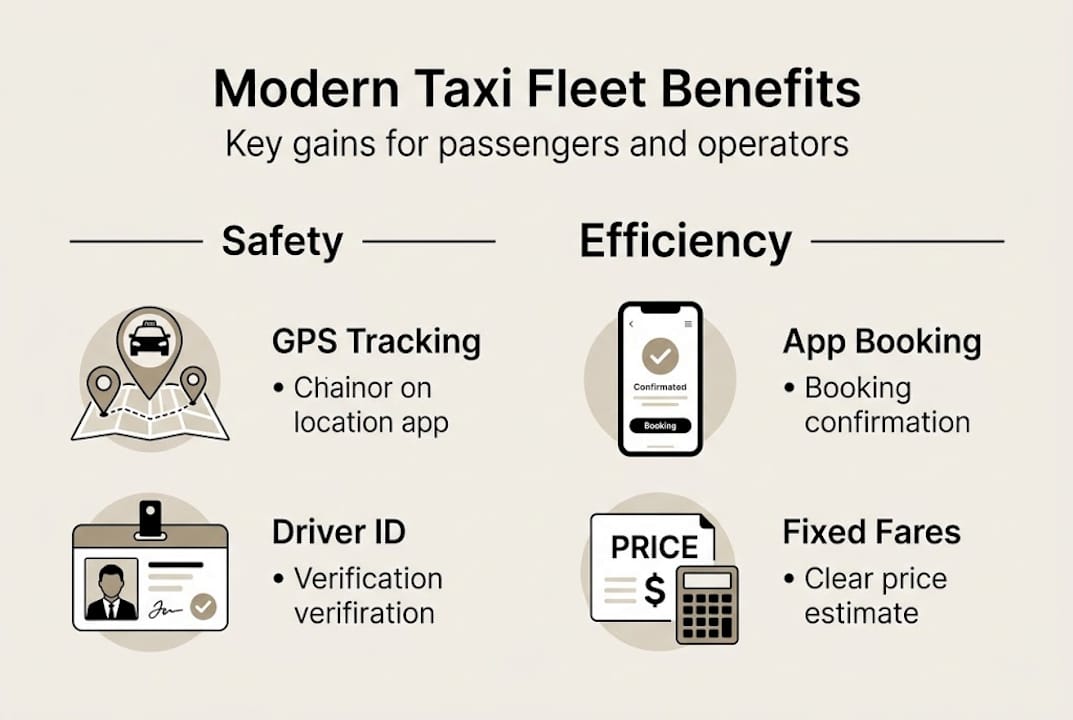
Optimised fleets achieve fuel and efficiency savings, a 98.1% seatbelt usage rate among monitored drivers, and customer ratings reaching 4.4 out of 5. These are not aspirational figures. They reflect what happens when fleet management software is properly implemented and drivers are held accountable through data.
For taxis serving Larnaca events, reliability metrics are especially important. A corporate client or wedding party cannot afford a no-show or a late arrival. Modern fleets build redundancy into their systems: if one driver has a problem, the dispatch software automatically reassigns the booking.
Here are five practical benefits you gain when using a modern fleet:
- Predictable pricing — Fixed fares mean no surprises at the end of a journey.
- Driver accountability — Rated profiles and monitored behaviour create a professional standard.
- Flight monitoring — Airport pickups adjust automatically to your actual arrival time.
- Safety transparency — GPS tracking means someone always knows where your vehicle is.
- Consistent vehicle quality — Maintained fleets mean clean, air-conditioned, roadworthy cars every time.
Research from Trustpilot reviews of Larnaca taxi operators shows that passengers consistently rate punctuality and driver professionalism as the top two factors in their satisfaction. Modern fleet management directly addresses both. Studies also suggest that around 60% of passengers have previously avoided taxis due to concerns about reliability or safety. Digital fleets are steadily changing that perception.
What most guides miss: The local realities and global lessons
Most articles about taxi technology focus on Silicon Valley apps or major European cities. Larnaca’s story is different, and that difference is instructive.
Cyprus is taking a regulation-first approach rather than allowing technology to outpace the rules. That matters. In many cities, ride-hailing platforms expanded rapidly, bypassing licencing laws and creating a two-tier system that ultimately harmed both passengers and legitimate operators. The 2026 reforms in Cyprus are designed to prevent exactly that outcome.
For tourists and locals alike, this means the licensed, app-based taxi is not just a convenience. It is a protected, regulated service. As one mobility expert noted, technology must modernise transport rather than bypass the rules that keep passengers safe. Choosing a licensed fleet over a cheaper, unregulated alternative is not just about comfort. It is about ensuring you have recourse if something goes wrong.
What most people also overlook is the value of tailored vehicles for special occasions. Premium event taxis, minivans for group airport transfers, and executive cars for corporate arrivals are all part of what a modern fleet offers. Price should not be your only criterion. Reliability, compliance, and the right vehicle for your specific need are what genuinely make the difference.
Book your modern taxi in Larnaca — quick, safe and flexible
Understanding what a modern taxi fleet offers is the first step. Taking advantage of it is the next.

At Taxi in Larnaca, we operate a fully managed, digitally coordinated fleet built around the needs of tourists, residents, and corporate travellers. Whether you need a reliable airport transfer vehicle that tracks your flight in real time, or premium taxi services for events where punctuality is non-negotiable, we have the right vehicle and the right driver ready for you. Fixed prices, card payments, and 24/7 availability mean you can book with confidence for any occasion. Visit taxiinlarnaca.com to explore your options and secure your booking today.
Frequently asked questions
How can I book a modern taxi in Larnaca?
App-based booking is the most convenient option, offering real-time tracking, fixed prices, and cashless payment, though website and phone bookings are also widely available.
What safety features do modern taxi fleets provide?
Modern fleets use GPS tracking, SOS buttons, geofencing, driver ID profiles, and AI-driven maintenance alerts to keep passengers safe throughout every journey.
Are there fixed prices and payment options for Larnaca taxis?
Yes. Most modern fleets offer fixed fares and card payment options, so you know the full cost before you travel and can pay without cash.
What are the main differences between traditional and modern taxi fleets?
Modern fleets use apps, GPS, digital dispatch, and safety technology that traditional taxis simply do not have, making them faster, safer, and more accountable.
How are taxi reforms in Cyprus affecting passengers?
The 2026 reforms require digital platforms, taximeters, and card payments across all licensed operators, making rides safer, more transparent, and easier to book for everyone.