

Taxi etiquette for tourists in Larnaca: Your guide
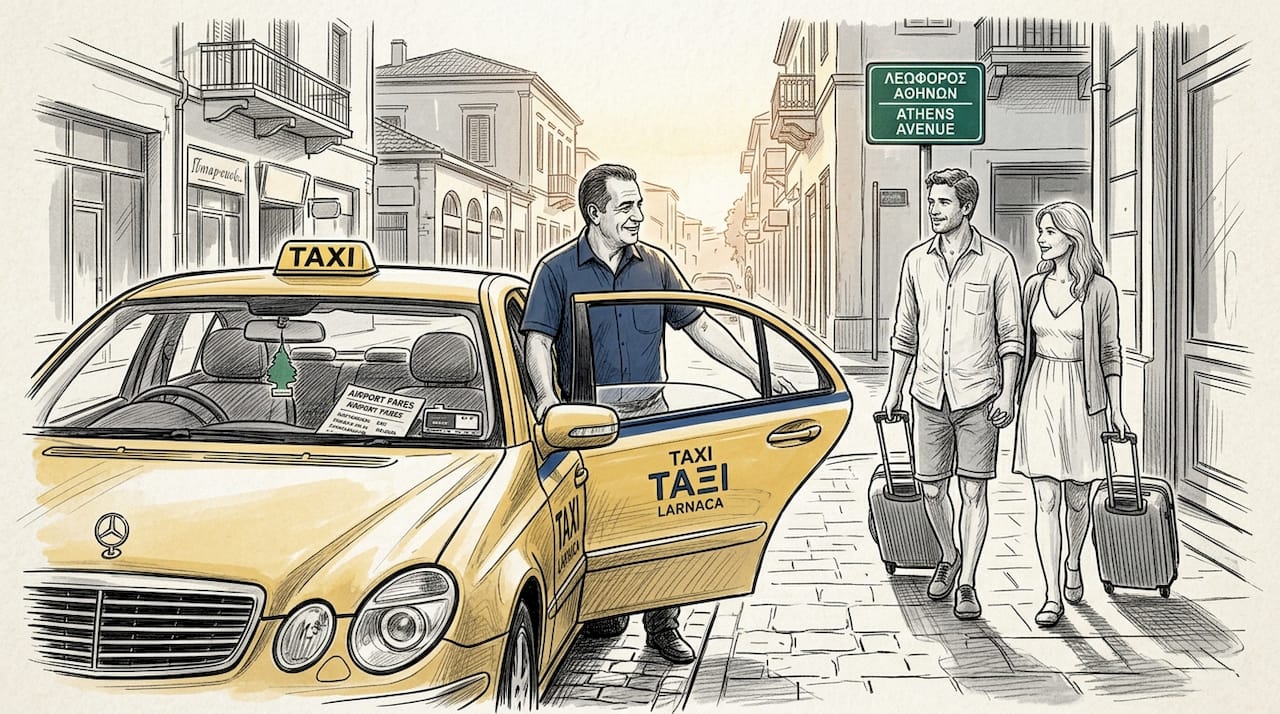
Taxi etiquette for tourists in Larnaca: Your guide
TL;DR:
- Taxi customs in Larnaca emphasize friendly greetings, respectful seat choices, and courteous luggage handling, which tourists should observe.
- Fares are typically metered with cash payments preferred; tipping around 10% or rounding up is customary but not obligatory.
- Booking through licensed operators ensures reliable, safe service, while respecting local etiquette enhances the overall experience.
Stepping off a plane in Larnaca and hailing a taxi feels straightforward until you realise that taxi customs here are not quite what you experienced back home. Many tourists assume that polite behaviour and payment habits transfer seamlessly from country to country. They don’t. Cyprus has its own distinct transport culture, and Larnaca’s taxi scene carries local expectations around greetings, tipping, fares, and conduct that can catch visitors off guard. Follow this guide and you’ll feel confident, respectful, and genuinely welcomed from your very first ride.
Table of Contents
- Understanding taxi etiquette in Larnaca
- Navigating fares and payment practices
- Booking and riding safely: Practical tips for tourists
- Common mistakes: Etiquette pitfalls to avoid
- What most tourists miss about taxi etiquette in Larnaca
- Enhance your Larnaca travel with trusted taxi services
- Frequently asked questions
Key Takeaways
| Point | Details |
|---|---|
| Local etiquette matters | Respectful greetings and farewells are valued in Larnaca taxi culture. |
| Confirm fares up front | Always agree the fare before starting your taxi journey to avoid surprises. |
| Safe booking is essential | Choose licensed taxis and pre-book to ensure safety and reliability. |
| Politeness goes a long way | A courteous approach improves your travel experience and driver service. |
| Avoid common mistakes | Adapting to local customs helps avoid frustration and misunderstandings. |
Understanding taxi etiquette in Larnaca
Good etiquette starts before you even sit down. In Larnaca, taxi drivers take pride in their work, and a warm, simple greeting goes a long way. A friendly “Kalimera” (good morning) or “Kalispera” (good evening) in Greek earns genuine appreciation, though English works perfectly well. Acknowledge your driver as a person, not just a service. At the end of your journey, thank them sincerely. These small courtesies set a positive tone and often lead to better conversations and local tips you won’t find in any guidebook.
Seat etiquette is another area where tourists frequently get things wrong. In Cyprus, it is generally acceptable to sit in the front passenger seat, particularly for solo travellers. This is a sign of friendliness rather than presumption. Groups or couples tend to sit in the back, which is equally fine. The key is to read the situation and not assume that back-seat-only rules apply as they might in the United Kingdom or the United States.
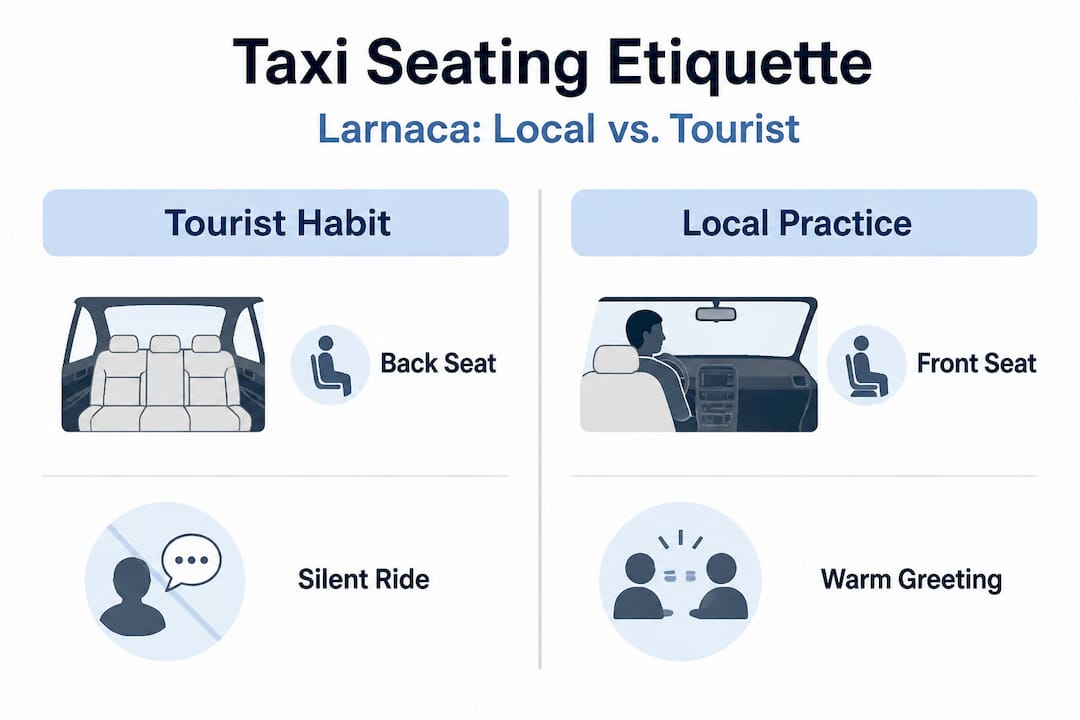
Luggage handling is worth paying attention to as well. If your driver helps load bags into the boot, a polite acknowledgement is expected. Don’t just stand to the side scrolling your phone while the driver wrestles with your suitcase. Step in, assist where you can, and thank them afterwards. This small gesture reflects the interpersonal warmth that Cypriot culture values greatly.
Understanding Cyprus taxi industry standards will also help you set realistic expectations about vehicle quality, driver professionalism, and conduct during the ride. Here are the core etiquette points to remember:
- Greet your driver when you enter and say goodbye when you leave
- Avoid eating strong-smelling food in the vehicle
- Keep your voice at a reasonable level, especially on phone calls
- Request any preferences, such as air conditioning settings, politely
- Respect the driver’s music or radio choice unless it is genuinely bothersome
“A taxi ride in Larnaca can be one of your most memorable local experiences if you approach it with respect and genuine curiosity. Drivers here often double as informal local guides.”
Finding reliable taxis in Larnaca also means choosing operators who share this commitment to mutual respect, creating a smoother, more enjoyable experience for everyone involved.
Navigating fares and payment practices
After learning the etiquette basics, understanding how to handle fares and payment is crucial for avoiding misunderstandings. Taxi fares in Larnaca operate on a metered system, with fixed rates for certain journeys such as the airport route. The meter starts at a base rate and increases per kilometre, with additional charges that may apply late at night, on Sundays, or during public holidays. Knowing this in advance prevents any shock when the fare is higher than you expected after a late-night return from a restaurant.
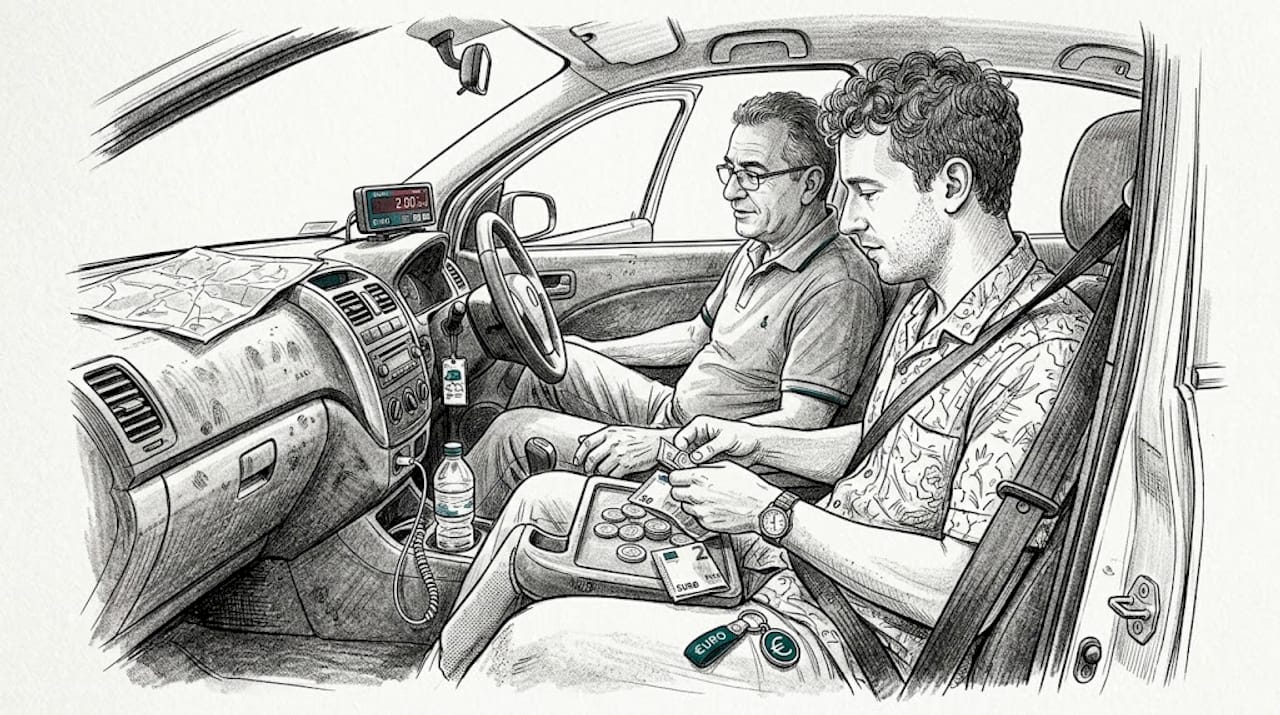
Here’s a quick breakdown of how the fare structure typically works:
| Journey type | Fare basis | Notes |
|---|---|---|
| City centre rides | Metered | Base rate plus per km charge |
| Airport transfers | Fixed or metered | Often fixed rate; confirm beforehand |
| Night journeys (after midnight) | Metered with surcharge | Higher rate applies |
| Sunday and public holiday rides | Metered with surcharge | Additional percentage added |
| Long-distance trips | Negotiable or metered | Agree in advance for clarity |
Always consult a current taxi fare guide before your trip so you arrive with a realistic sense of what routes will cost. This helps you spot any inconsistency and ask informed questions without confrontation.
Regarding payment methods, cash remains the most widely accepted form of payment in Larnaca taxis. Euros are the currency, so make sure you have small notes and coins available. Handing over a large denomination note for a short fare can cause awkward delays or even a polite but firm refusal if the driver lacks change. An increasing number of taxis now accept card payments and some support contactless methods, but this is not universal. Always confirm your payment method with the driver before the journey begins, not at the destination.
Pro Tip: Before setting off, ask your driver “Is card payment okay?” This one short question eliminates any end-of-journey awkwardness and shows you are thinking ahead rather than assuming.
Tipping is customary in Larnaca but not obligatory. The standard practice is to round up the fare to the nearest euro or leave small change. For example, if the meter reads €8.60, handing over €9 or €10 and saying “keep the change” is perfectly appropriate. For longer or more helpful journeys, a tip of around 10% is genuinely appreciated and reinforces the goodwill that makes taxi culture in Cyprus so pleasant.
Booking and riding safely: Practical tips for tourists
Once payment and fare processes are clear, knowing how to book and ride securely is the next step for tourists. Booking your taxi through a reputable channel is always preferable to flagging down a random vehicle, especially if you are arriving late at night or carrying valuable luggage.
Here are the most reliable ways to book a taxi in Larnaca:
- Use a pre-vetted taxi company: Booking through a professional operator guarantees a licensed, insured vehicle with a vetted driver.
- Ask your hotel concierge: Hotels maintain relationships with trusted local taxi firms and can arrange a pickup on your behalf quickly.
- Phone a registered local company directly: A phone booking creates a paper trail and usually provides a fare estimate upfront.
- Avoid unlicensed touts: At Larnaca International Airport and tourist areas, unofficial drivers sometimes approach travellers. Always decline politely and seek an official vehicle.
- Book in advance for early or late flights: Availability can be limited during peak hours, so scheduling your ride ahead of time protects you from delays.
Learning about taxi safety tips before you travel gives you a clear framework for evaluating whether a vehicle and driver meet the standards you should expect. Similarly, reviewing airport taxi safety advice is particularly valuable for arrival day, when you are tired, possibly disoriented, and most vulnerable to accepting the first offer you receive.
Recognising a licensed taxi in Larnaca is straightforward once you know what to look for. Official taxis display a taxi sign on the roof, carry a printed fare schedule visible to passengers, and the driver will have credentials on display. The vehicle should be clean, well-maintained, and roadworthy. If anything feels off, trust your instinct and wait for another option.
Pro Tip: Screenshot the taxi’s registration plate and send it to a friend or family member before you depart. This simple habit takes seconds and provides peace of mind, particularly for solo travellers.
The pre-booking taxi benefits are considerable, including fixed fares, reliable pickup times, and drivers who are already briefed on your destination. When you book in advance, you also avoid the stress of communicating your destination in a hurry. Write your destination down in both English and Greek if possible, or have the address ready on your phone to show the driver clearly. This prevents misunderstandings, especially for addresses in quieter residential areas that can be tricky for even experienced drivers to locate quickly.
Common mistakes: Etiquette pitfalls to avoid
To bring all tips together, let’s highlight the common pitfalls that trip up unwary tourists. Many travellers carry habits from their home countries that simply don’t translate well to the Cypriot context.
| Common tourist behaviour | Local expectation in Larnaca |
|---|---|
| Sitting in the back as default | Front seat is acceptable and often friendly |
| Assuming card payment is standard | Cash is preferred; confirm card access first |
| Forgetting to greet the driver | A simple hello is considered basic courtesy |
| Ignoring the driver’s local advice | Drivers often know shortcuts and local insights |
| Bargaining aggressively over fares | Metered fares are set; polite questions are fine, but arguing is disrespectful |
| Slamming vehicle doors | Gentle closure is expected and shows care |
One of the most frequent errors tourists make is overlooking payment customs entirely. Arriving at the destination and then discovering you have no cash and the driver doesn’t take cards leads to an uncomfortable and entirely avoidable situation. Another common mistake is dismissing driver advice. If your driver suggests an alternative route, there is usually a good reason, perhaps traffic, roadworks, or a more direct path you simply won’t find on your map app.
Adapting to local expectations doesn’t require dramatic changes to your behaviour. It simply means being a little more observant and a little more courteous than you might need to be in a city where you know all the rules already.
- Always have some euros in small denominations ready before entering any taxi
- Avoid conducting loud or argumentative phone calls during the journey
- Don’t eat in the vehicle unless the driver explicitly says it’s fine
- Confirm your destination clearly at the start, not halfway through the ride
- Use how to choose a safe taxi as a reference when you’re unsure about a vehicle’s legitimacy
Being aware of these pitfalls puts you well ahead of the average tourist and ensures your interactions with drivers are smooth, respectful, and genuinely enjoyable.
What most tourists miss about taxi etiquette in Larnaca
Here’s the honest truth that most travel guides won’t say plainly: tourists obsess over price and safety but completely overlook the human side of the taxi experience. That’s the part that actually determines how good your journey feels.
In Larnaca, taxi drivers are often long-standing professionals who know every side street, every restaurant worth visiting, and every beach that doesn’t appear on the tourist maps. They are, in a very real sense, walking encyclopaedias of local knowledge. But they only share that knowledge with passengers who treat them like people rather than transport tools. The difference between a driver who says “have a nice day” and one who says “you should visit that little fish taverna near Finikoudes, it’s where locals actually eat” comes down entirely to how you treated them in the first five minutes of the ride.
We’ve seen this pattern consistently. Passengers who enhance their trip with reliable taxis aren’t just getting from A to B. They’re getting context, recommendation, and connection. That’s something no app, no guidebook, and no travel blog can fully replicate.
The other thing tourists consistently miss is that patience is itself a form of etiquette. Larnaca moves at its own rhythm. If your driver takes a moment to finish a short call, adjust the GPS, or chat briefly with a colleague at a rank, that’s normal. Sighing loudly, checking your watch pointedly, or snapping “can we go now?” creates an awkward atmosphere that follows you for the entire journey. Relax. You’re on an island in the Mediterranean. There is very little that won’t wait five minutes.
Enhance your Larnaca travel with trusted taxi services
Knowing the etiquette is only half the equation. The other half is choosing a service that makes it easy to put that knowledge into practice.

At Taxi in Larnaca, we provide professional, licensed taxi services that align with everything covered in this guide. Our experienced drivers understand tourist needs, communicate clearly in English, and operate with transparent, metered or fixed-rate fares depending on your journey. Whether you need a reliable airport transfer, a comfortable city ride, or a prearranged vehicle for a special occasion, we make the booking process simple and the journey stress-free. Visit taxiinlarnaca.com to book in advance, view our services, and travel Larnaca with the confidence that comes from choosing a trusted local operator.
Frequently asked questions
Are tips expected for taxi drivers in Larnaca?
Tipping is customary but not obligatory in Larnaca. Rounding up the fare or leaving small change is the most common and appreciated approach.
Can I pay by card for taxis in Larnaca, Cyprus?
Most taxis primarily accept cash in euros, though a growing number support card and contactless payments. Always confirm your preferred payment method with the driver before your journey begins.
How do I recognise a licensed taxi in Larnaca?
Licensed taxis display a roof sign, a visible fare rate sheet, and the driver’s credentials inside the vehicle. If in doubt, your hotel concierge can help verify a vehicle’s legitimacy before you board.
What should I do if I have a complaint about a taxi service?
Contact the taxi company directly with your journey details, and retain your receipt as evidence. For unresolved issues, local transport authorities in Cyprus can provide further guidance.
Is pre-booking taxis recommended in Larnaca?
Pre-booking is strongly recommended during peak tourist season and for all airport journeys, as it guarantees availability, confirms the fare in advance, and removes the stress of last-minute searching.